
Inside Excellence Series
Trust Through Transparency: The Advisor’s Responsibility in a Changing Industry
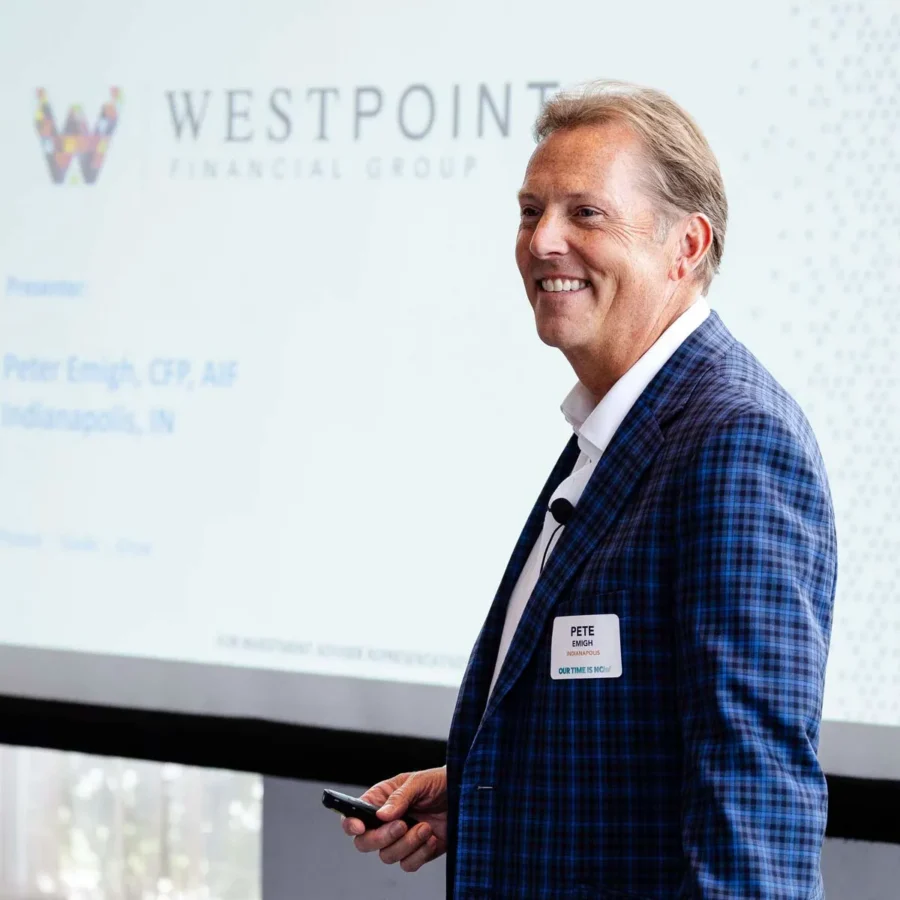
A conversation with Peter Emigh, CFP®, AIF®, CPFA®
Based in Indianapolis, Peter brings more than 30 years of experience helping families and businesses develop thoughtful, strategic plans for their financial futures.
In a financial landscape defined by rapid innovation, evolving regulations, and growing client expectations, advisors face constant pressure to move quickly. Yet enduring trust is rarely built at speed. It is built through clarity, careful analysis, and the willingness to have honest conversations — especially when those conversations are complex.
Peter’s philosophy reflects a belief shared across WestPoint, credibility is earned through transparency, and trust is strengthened through disciplined decision-making long before recommendations are ever made.
At the center of Peter’s approach is a simple but powerful commitment — high-level client service grounded in accuracy and honesty. Prompt responses are expected. Thorough explanations are standard. Fee structures are clearly outlined and carefully reviewed. Rather than glossing over details, Peter leans into them, ensuring clients fully understand both the opportunities and the risks in front of them.
In one recent example, a client specifically praised the clarity of his fee explanation — a moment that reinforced what Peter has long believed: clients value transparency more than persuasion.
“Clients don’t expect perfection. They expect honesty.
When you clearly explain both the upside and the downside, trust follows naturally.
That same discipline shapes how Peter evaluates new investment ideas. In an environment where new concepts and strategies emerge constantly, he resists the temptation to react impulsively. His process is deliberate, involving thorough research, consultation with respected peers, and active debate around different perspectives. Every recommendation must withstand scrutiny and align with the client’s long-term objectives before it reaches the table.
Equally important is the absence of pressure. Clients are given space to consider decisions thoughtfully, with full visibility into costs, trade-offs, and potential outcomes. The goal is not speed, but alignment.
As technology and artificial intelligence continue to reshape the financial services industry, Peter maintains a balanced perspective. While regulatory realities have slowed adoption in some advisory channels, he believes the influence of AI will expand, particularly in transactional areas such as insurance and retirement plan platforms. Younger generations may grow increasingly comfortable with AI-driven solutions, while many long-standing clients will continue to value personal interaction and human judgment.
Rather than resisting change, Peter is choosing to stay ahead of it by proactively educating himself on emerging tools and advancements. For him, technology is not a threat to the advisor’s role; it is an evolution that demands adaptability. The human element, including context, empathy, and ethical judgment, remains irreplaceable.
For emerging advisors, his advice is practical and forward-looking: build credibility slowly, communicate clearly about both risks and rewards, and focus on steady, long-term relationships rather than short-term wins. Reputation compounds the same way investments do, over time through disciplined action.
At WestPoint, trust is strengthened through diligence, integrity, and clear communication. As the industry continues to evolve, advisors who combine ethical discipline with thoughtful innovation will remain best positioned to serve clients — not just in today’s market, but in the years ahead.

The Takeaway
Sustainable success in financial advising is built on more than performance. It requires:
- Transparency and communication
- Prompt, reliable client service
- Honest discussion of both opportunities and risks
- A willingness to adapt as the industry evolves